Caring for the territory is a collective act
Results from our first sterilization day in Palomino, The Guajira.
The story
We arrived even though the road wouldn't allow it
On March 5 and 6, 2026, a team of two veterinarians and three veterinary assistants from the Calicanto clinic traveled from Cali to Palomino with a suitcase full of surgical supplies, medications, and materials to set up a field operating room. The goal: to carry out a free spay and neuter clinic for dogs and cats in the municipality.
What they didn't know was that the Mendihuaca bridge, (the only way through) had collapsed days before due to heavy rains. The team had to cross on foot, carrying all the logistics, so as not to cancel the event that dozens of families were already waiting for.
They arrived with suitcase in hand, crossing what was left of the bridge. That was the first thing we saw.
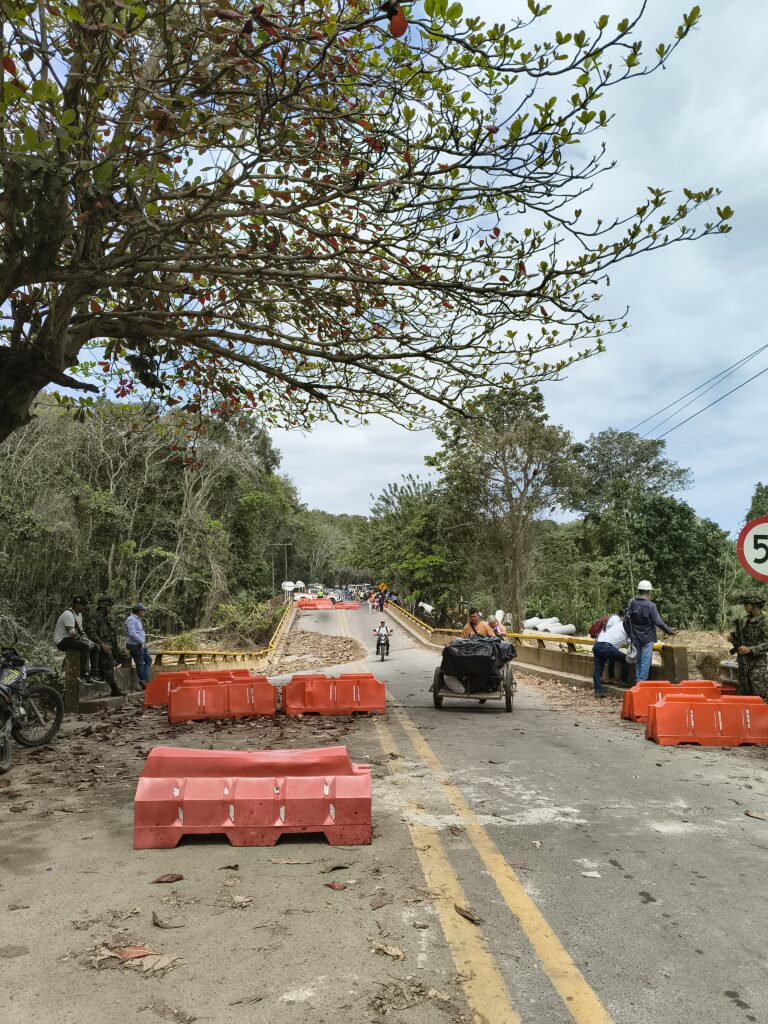
The Mendihuaca bridge, damaged by heavy rains before the initiative.
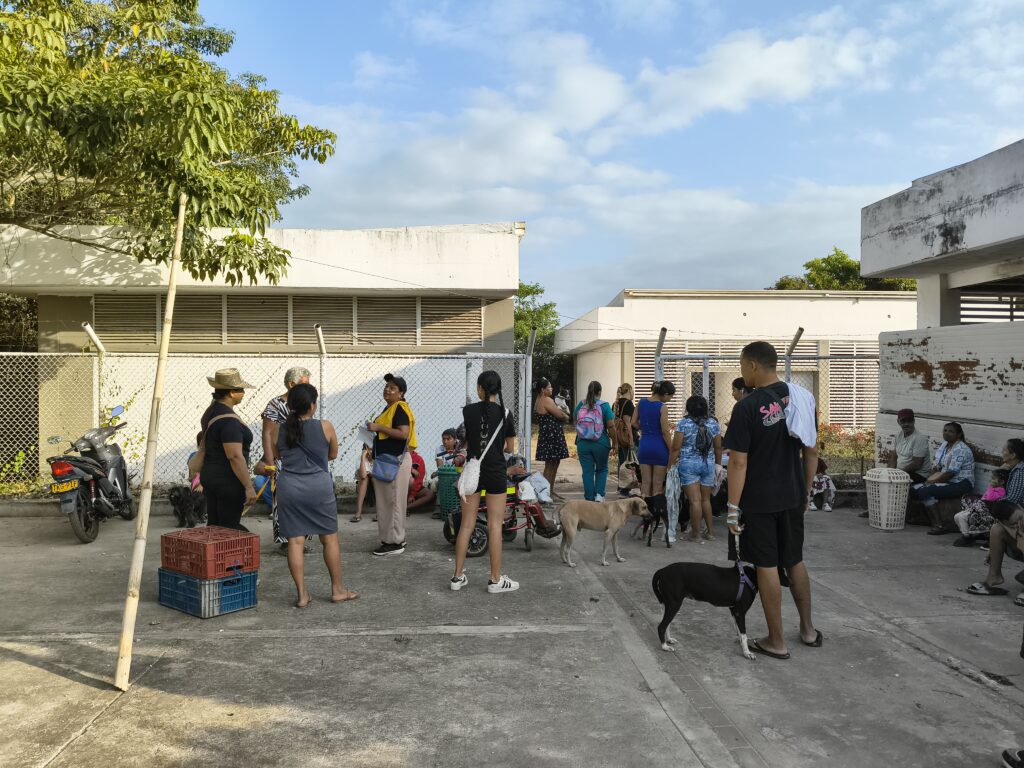
Once on the ground, the challenge wasn't over. Palomino is an area where the bond between people and their animals exists, but access to veterinary services is almost nonexistent. Convincing some families to spay or neuter their pets required time, dialogue, and a presence in the neighborhoods.
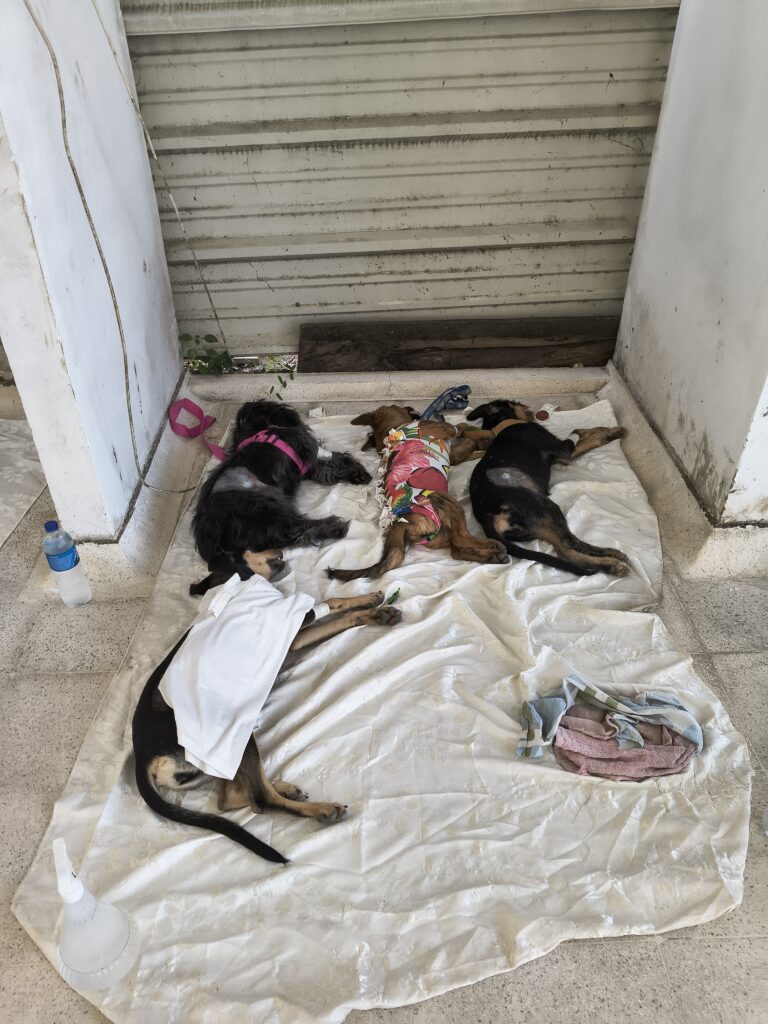
Over two days of continuous work, the Calicanto team attended animals from 9 different neighborhoods —from the urban center of Palomino to Marquetalia, Invasión, Mingueo, and others— and managed to sterilize 158 animals.
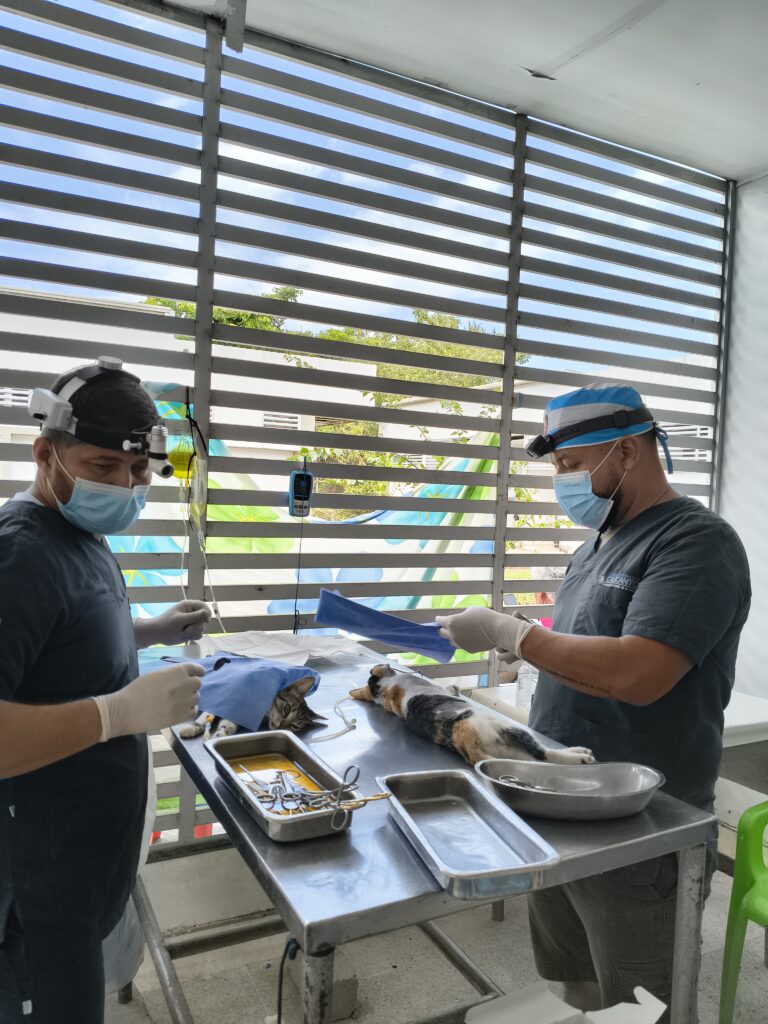
An operating room built with whatever we had
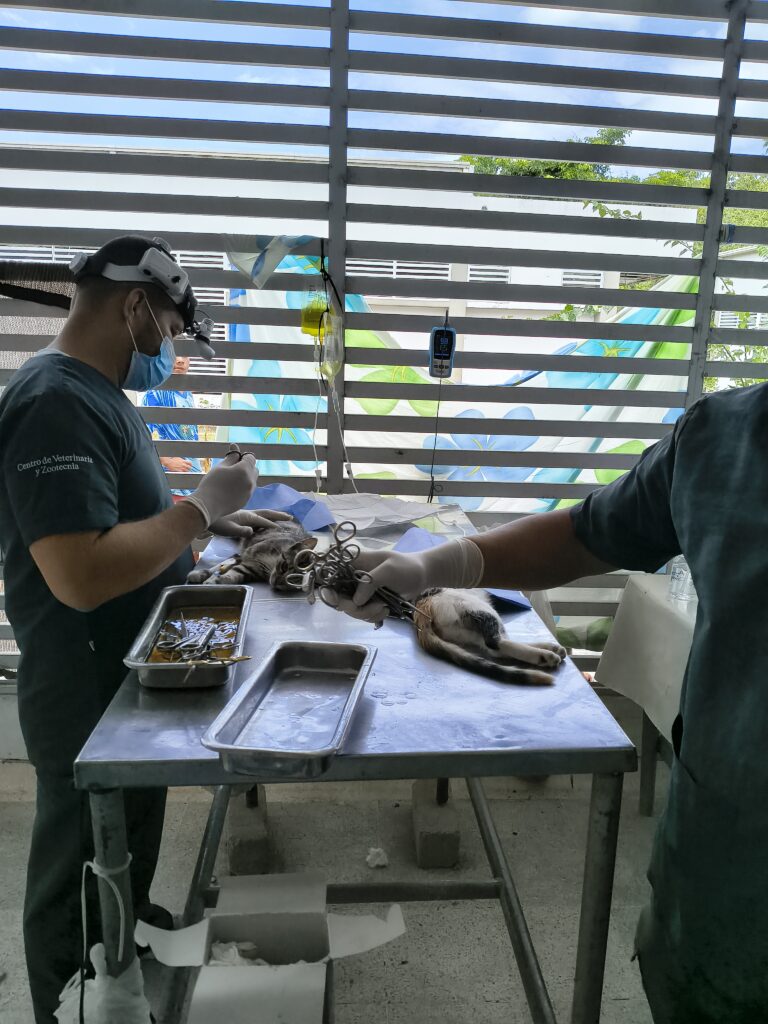
No clinic, no hospital infrastructure. The team adapted community spaces to set up surgical tables, IV lines, and instruments. Each procedure was performed to the same standards as in a veterinary clinic, just under field conditions.
The results
158 animals. 9 neighborhoods. 2 days.
Each number represents a direct intervention on the territory.
Distribution by neighborhood
Canines vs. felines
Age distribution
Distribution by sex
The most important finding: having a family doesn't mean being cared for
79,7% of sterilized animals belong to a family. However, 54,4% roam freely throughout the territory for most of the day—including unsupervised community animals. It's on the streets where fights, unplanned pregnancies, and contact with wildlife occur. Sterilizing an animal with an owner has the same territorial impact as sterilizing a stray.
Data collected during the sterilization day held on 5 and 6 of March 2026 in Palomino, The Guajira. · Source: internal report Minga Global Foundation.
– yunas mission –
Bringing smiles to those in need
Every little bit helps and we are grateful for your support!

Causes
To promote the welfare of children and families, provide assistance to the elderly and disabled, relieve poverty and suffering & protect the environment.

Environment
The environment for a non-profit organization is one that is mission-driven, results-oriented, and focused on making a difference in the community.

Food
Our mission is to provide nutritious food to those in need, and to do so with compassion and respect. We envision a world where no one goes hungry.


